
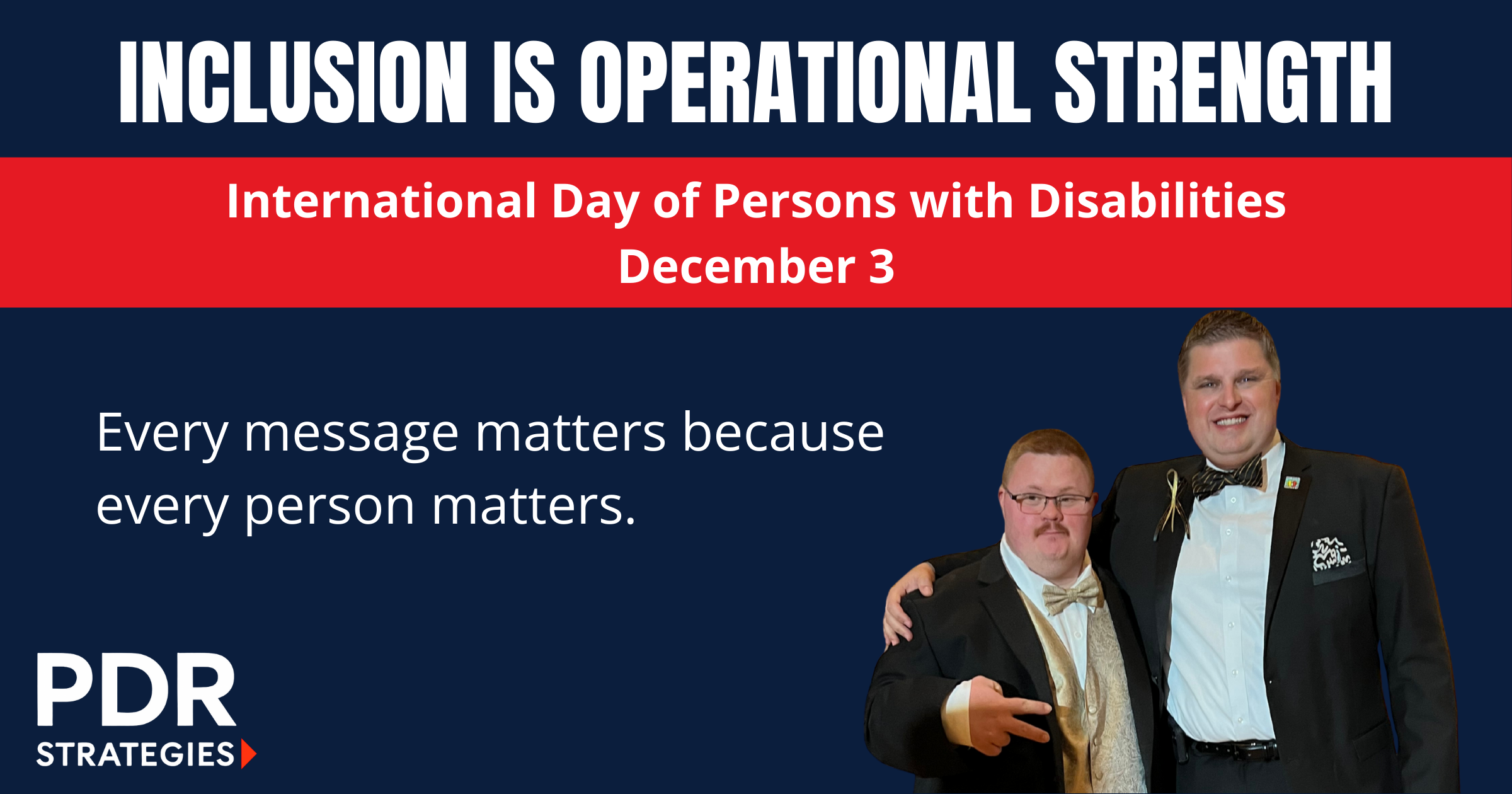
December 3 marks the International Day of Persons with Disabilities, a global observance dedicated to recognizing the dignity, strengths, and contributions of people of all abilities. It is also a reminder that inclusion is not a box to check. It is a commitment that must be reflected in the way we treat people and the way we communicate every day.
For me, this day is not simply symbolic. It is personal.
I have been involved with Best Buddies New Hampshire since 2018, and today I serve as vice chair of the advisory board. Through the Best Buddies Citizens program, I was matched with my friend James four years ago. Our friendship has shaped how I understand inclusion and why communication matters so deeply.
But this story is not just about James. It is about people. All people. People who deserve to be recognized, respected, and included, just like you and me.
James is intelligent, caring, compassionate, and hardworking. He is a State Ambassador for Best Buddies and a four-sport athlete in Special Olympics. Most of all, he is a friend who shows me what it looks like when people are valued for who they are.
Seeing Inclusion in Practice
Friendship has a way of changing the way you think. When you know someone like James, inclusion becomes less about policy and more about people. It becomes the way you show up, listen, and communicate. It becomes the choices you make in meetings, conversations, and messages.
I have seen how communication can lift people up or leave them out. The words we choose and the tone we use tell others whether they belong in the room. Inclusive communication creates connection. Exclusionary communication creates barriers.
James and his family have experienced the difference. When conversations include them, when they are treated with respect, and when their voices matter, the impact is real. And that impact is not limited to one family or one community. It is universal.
Inclusion grows when we shift from speaking about people to speaking with people. That shift is the heart of meaningful communication.
Inclusion and Communication Go Hand in Hand
In my work at PDR Strategies, I help organizations communicate with clarity and credibility. But communication cannot be credible unless it is inclusive. Strategic communication depends on whether every person can access, understand, and see themselves in the information you share.
Inclusive communication means:
• Using plain and clear language
• Choosing images and stories that reflect our communities
• Ensuring materials are accessible to everyone
• Creating space for people of all abilities to shape the messages that affect them
Words matter. They set expectations. They shape culture. They determine whether people feel valued or invisible.
Why This Day Matters
The International Day of Persons with Disabilities is not only a moment to acknowledge challenges or celebrate progress. It is an opportunity to reflect on how we communicate as leaders, colleagues, neighbors, and human beings.
It is a reminder to look at our systems and ask, “Who is not being heard?”
It is a chance to evaluate our practices and ask, “Who is not being included?”
It is a prompt to look at our messages and ask, “Who might not understand what we are trying to say?”
Inclusion must reach beyond awareness campaigns. It must be reflected in hiring practices, policy development, customer service, community engagement, and daily communication. For public safety, government, and community organizations, inclusion is not just a value. It is an operational strength. When more voices are included, decisions improve and trust increases.
Every Message Matters
The idea that every message matters because every person matters is more than a professional principle. It is a personal one.
My friendship with James has taught me that communication is not just the exchange of information. It is the exchange of understanding. When we communicate with intention, patience, and respect, we create connection. And connection is where inclusion takes root.
So today, I encourage leaders, communicators, and teams everywhere to ask themselves:
• Are we making space for all voices?
• Are we communicating in ways that everyone can access and understand?
• Are we recognizing the people behind the policies and the individuals behind the statistics?
Inclusion is not a project. It is a practice.
And it begins with how we communicate.
Leave a Reply